Crimes are normally supposed to be intentional acts that cause harm – such as theft, violence against the person, or damage to property.
Increasingly crimes are drawn much more widely, catching people who never caused harm at all, or never meant to.
The recently passed Crime and Policing Act created over 50 new crimes, many of which are drawn so broadly that they would catch everyday actions, penalising (and potentially imprisoning) innocent members of the public. These are added to the estimated 3000 new offences created since 1997.
Here are some of the Crime and Policing Act crimes below, many of which came into force last week…
1. Delivering a kitchen knife to the purchaser’s wife and not the purchaser
Companies delivering knives ordered online must deliver the item to the buyer, and not (for example) another member of their family (Section 32). The person receiving the parcel must show an identity document (a passport or driver’s licence) to the courier.
This applies to any ‘bladed product’ delivered to a house or business premises.

It is also an offence for a company to fail to obtain a copy of an identity document and a photograph of the person who has bought the knife online.
And it is an offence to arrange for a knife to be delivered to a collection point (although it is a defence to show that the item was clearly marked as a knife, specifying that it should only be collected by the purchaser).
Crimes:
- To deliver the ‘bladed product’ package to someone who is not the purchaser;
- To fail to obtain a photograph and copy of an ID document from a knife purchaser.
Penalties:
The courier can be convicted of an offence and fined.
2. Possessing a mobile phone that is capable of using 5 SIM cards
It is a crime to possess a mobile phone capable of using 5 SIM cards simultaneously or interchangeably (Sections 151-3).
The Bill notes that such devices are used legitimately for things such as tracking freight or maintaining public transport services. If you are using them for this reason, these can be invoked in your defence if you have been prosecuted.
Crimes:
- Possessing a device capable of using 5 SIM cards;
- Supplying to someone else a device capable of using 5 SIM cards.
Penalty:
A fine
(Addendum: the Bill also allows for the Secretary of State to in the future ban any ‘specified article’, which they believe may be ‘used in connection with (electronic) fraud’.)
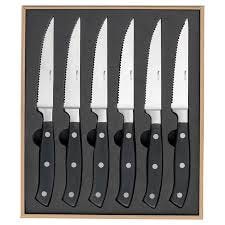
3. Failing to tell the police about a sale of 6 steak knives
Any knife seller must report a ‘bulk sale’ of knives to the police (Section 42-3). This is defined somewhat confusingly as:
(a) six or more bladed articles, none of which form a qualifying set of bladed articles;
(b) two or more qualifying sets of bladed articles;
(c) one or more qualifying sets of bladed articles and five or more bladed articles that do not form a qualifying set.
(3) “Qualifying set of bladed articles” means three or more bladed articles packaged together for sale as a single item, where each bladed article is a different size or shape from the others.
To complicate the matter further, the ‘bulk’ sales could occur within 30 days to one individual, or to different individuals at the same address. So a knife delivery company would have to be cross-referencing their sales data by address and purchaser, to see if any of the above combinations have been met.
In a rare flash of common sense, the government guidance exempts ‘blocks’ of kitchen knives and disposable razor blade cartridges; but undermines this by including steak knives as reportable, or someone buying single knives alongside their kitchen knife block, or someone buying multiple blocks of kitchen knives:
There will also be exemptions for qualifying sets of knives such as kitchen knife blocks. These will be sets of at least three knives that are each a different size or shape no matter how many knives the set contains. The purchase of multiple sets of knives or the purchase of a single set alongside individual knives where these combinations lead to a total purchase of at least six knives will be reportable.
Crime:
- To fail to report any ‘bulk sale’ of knives;
- To fail to cross-reference sales to identify someone who has bought 6 or more knives in 30 days.
Penalty:
Fine
(Addendum: the Act also gives the police powers to seize any blade or ‘sharply pointed’ article, including kitchen knives, if they believe that it could be used in connection with unlawful violence. A person has 6 months to apply to get their knife back, after which it can be destroyed.)
4. Wearing a mask at a protest, or holding a banner over someone’s face
There will be a new offence of wearing or using any item to conceal your own or another person’s identity at a protest (Section 157), if that protest has been designated by a police inspector.
This could include any mask or face covering.
It will also be a crime to be in possession of fireworks at any protest, even if you don’t intend to use the firework.
Crimes:
- Wearing or otherwise using an item that conceals your identity or another person’s identity’;
- Having a ‘pyrotechnic article’ in your possession, even at a one-person protest.
Penalty:
For the mask offence, up to one month in prison and a fine.
5. An online company not telling the police who their ‘content manager’ is
When asked by a senior police officer, an online service must appoint a ‘content manager’ responsible for removing content, and tell the police officer who this person is (Section 14).
New civil offences:
- To fail to appoint a ‘content manager’ when requested;
- To fail to tell the police officer who this content manager is;
- To give false information about who the content manager is.
Penalties:
This is a civil offence, but with hefty penalties: the police can issue a £60k penalty notice to the organisation, and a £10k penalty notice to the content manager.
6. Climbing on a memorial
The Act criminalises climbing on a number of listed memorials, including the Churchill monument in Parliament Square (Section 161). Obviously this is responding to the attack and damage of memorials during protests, but these are already criminal offences that have led to prosecutions.
In targeting not criminal damage, but the act of ‘climbing’ (including on the plinth), the Bill would criminalise children and tourists alike, who for some reason like to climb on monuments – an act that doesn’t necessarily imply disrespect or does the monument any harm. Indeed, on VE Day everybody climbed on monuments.
It is a defence to claim that you had ‘good reason’ to climb on the memorial.

Penalty:
Up to 3 months in prison and £1000 fine
7. Taking a screenshot of an apparently intimate Snapchat photo
If someone sends you a Snapchat photo of themselves that ‘appears to show’ them in an ‘intimate state’, with the intention that you can view it for a ‘limited time’, it is a crime for you to create a copy of the photograph (section 98).
Penalty:
6 months in prison or a fine