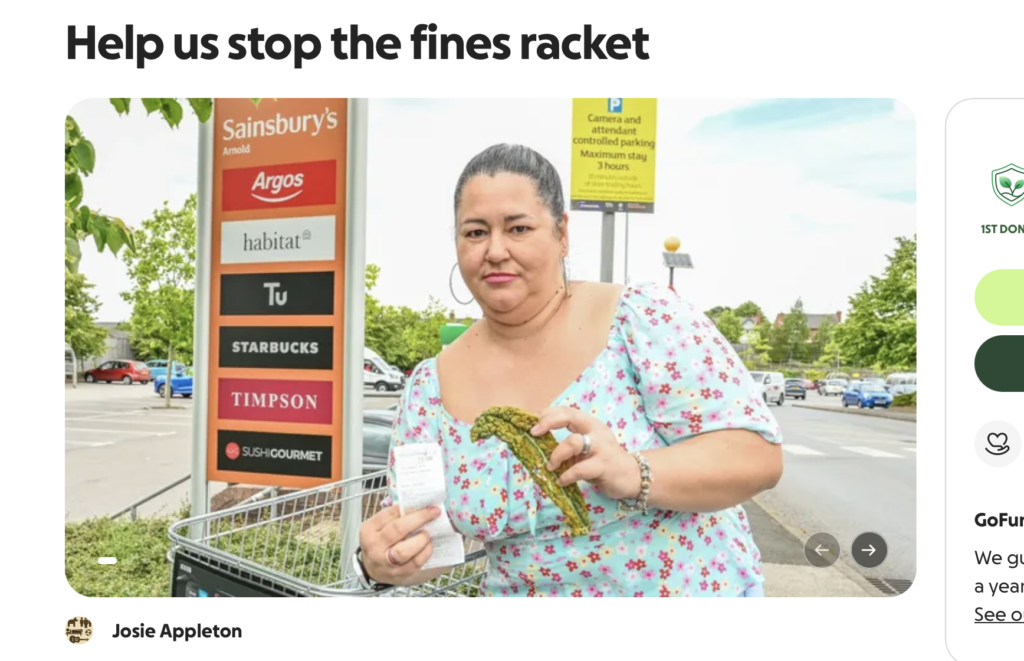
A community volunteer in Nottingham was fined for leaving a single kale leaf in a shopping trolley. She was fined by a private enforcement agent contracted by the council, who was incentivised to issue as many fines as possible.
This shouldn’t be happening any more. After a decade of campaigning, we finally changed the law: new Defra guidance clearly bans ‘pay per fine’ incentivised punishment. But councils are so far ignoring this guidance, which has not been publicised.
We need your help to fund campaigning over the next year, for a final push on this issue – to make sure that these corrupt contracts are scrapped, and that innocent people are no longer fined while going about their everyday business.
See below for more details what our campaign will do over the next year. Pitch into our Crowdfunder here.
Thank you,
Campaign for Freedom in Everyday Life
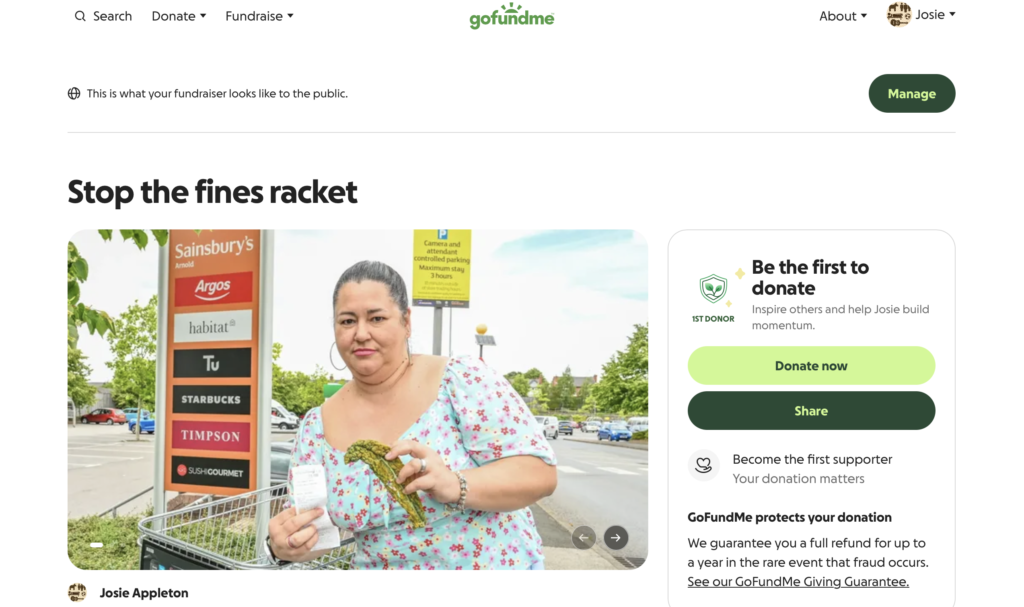
A community volunteer in Nottingham was fined £150 for leaving a single kale leaf in a shopping trolley. She had been collecting surplus supermarket food to deliver to families in need, and missed the leaf as she loaded her car in torrential rain. When she returned the trolley, an enforcement officer pounced and issued a penalty notice.
The officer worked for a private company, which is paid per fine and keeps 89.5% of the penalty income. The officer first said she’d left packaging, then called it food waste, then wrote the ticket for a cigarette butt. He couldn’t even get the offence right, because the offence was never the point. He was simply in ticket-issuing mode.
Across England, councils hand private firms the power to issue on-the-spot legal penalties – for litter, and for ‘busybody’ offences such as feeding the birds or busking (Public Spaces Protection Orders or PSPOs). There is no impartiality, and no real checks or balances. The result is the same corruption you would get if police were paid a bonus for every arrest.
We are seeing arbitrary, unaccountable enforcement against ordinary people going about their lives. The number of litter fines has risen from 727 a year to over 140,000. PSPO fines have just hit a record high: 25,366 issued in 2025, a third more than the previous peak. Most of these are issued by companies who are paid per fine – councils that employ a private firm issued more than 75% of all PSPO penalties, despite being barely one in ten councils.
In Harrow recently, an enforcement officer tried to fine a teenage girl for alleged spitting. When a passerby said she didn’t have to pay without evidence, the officers turned on him, asking ‘why are you messing with my money?’ and later threatening to ‘knock you…out and rip your teeth out’.

In other areas, contractors are fining people for anodyne, everyday actions, including feeding the birds, cycling in the town centre, standing in groups, or begging.
A five-year-old girl in Harrow was fined £1,000 after a parcel with her name on it was found in the street. A bookshop owner on the Wirral was fined £300 when officers called her sandwich wrapper ‘commercial waste’.
This is the return of the medieval practice of officials profiting personally from the fees and fines they imposed. These practices were abolished for a good reason, and now they are creeping back under cover of a council logo. And it is about to get worse: the maximum penalty for ‘busybody offences’ has just risen from £100 to £500, an amount that would be unpayable for many of those being fined.
Here’s the good news: We’ve changed the law.
After more than a decade of campaigning, we secured new Defra statutory guidance, in force since April 2026, which states that ‘private firms should not be able to receive greater revenue or profits just from increasing the volume of penalties’. In effect, it bans payment-per-fine.
And after three successive defeats for the government on House of Lords amendments – driven by our campaigning – the Home Office has promised equivalent guidance covering anti-social behaviour fines, the powers used to penalise bird feeding, loitering and busking. It is due by October.
But winning the guidance is only half the battle. Most councils are currently ignoring the Defra guidance, which has not been publicised. Without active monitoring and public pressure, this hard-won change to the law risks being quietly forgotten.
That’s where you come in. We need to raise £5,000 in public donations to run this campaign over the next year. With your support we will:
- Publicise the new law, so that everyone – companies and councils – know about it;
- Produce a public information guide so that anyone unfairly fined knows their rights;
- Survey councils to find out which are still paying firms per fine, and publish the results;
- Work with the Home Office to make sure the new anti-social behaviour guidance is robust;
- Publicise and support members of the public who have been fined unfairly.
Without our campaigning, these changes to the law would never have happened. Now we need to make them count.
If you believe that legal penalties should be issued fairly and in the public interest, please pitch in. If we’ve helped you in the past, please help us keep going.
(One note on how this works: at checkout, GoFundMe will suggest an optional tip for the platform itself, on top of your donation. This is entirely optional and can be set to zero.)