Tandridge District Council is considering a ban on ‘excessive horn honking’, which means drivers could be fined £100 pounds (soon to be £500) if they are judged to be honking their horn too much.
According to new research, 39 other councils have seen fit to bring through a similar ban on honking, under new laws designed to stop ‘car cruising’.
Vicky Heap from Sheffield Hallam University, and Clare Farmer from Deakin University in Australia, analysed the 69 active Public Spaces Protection Orders (PSPOs) that include ‘car cruising’ prohibitions.
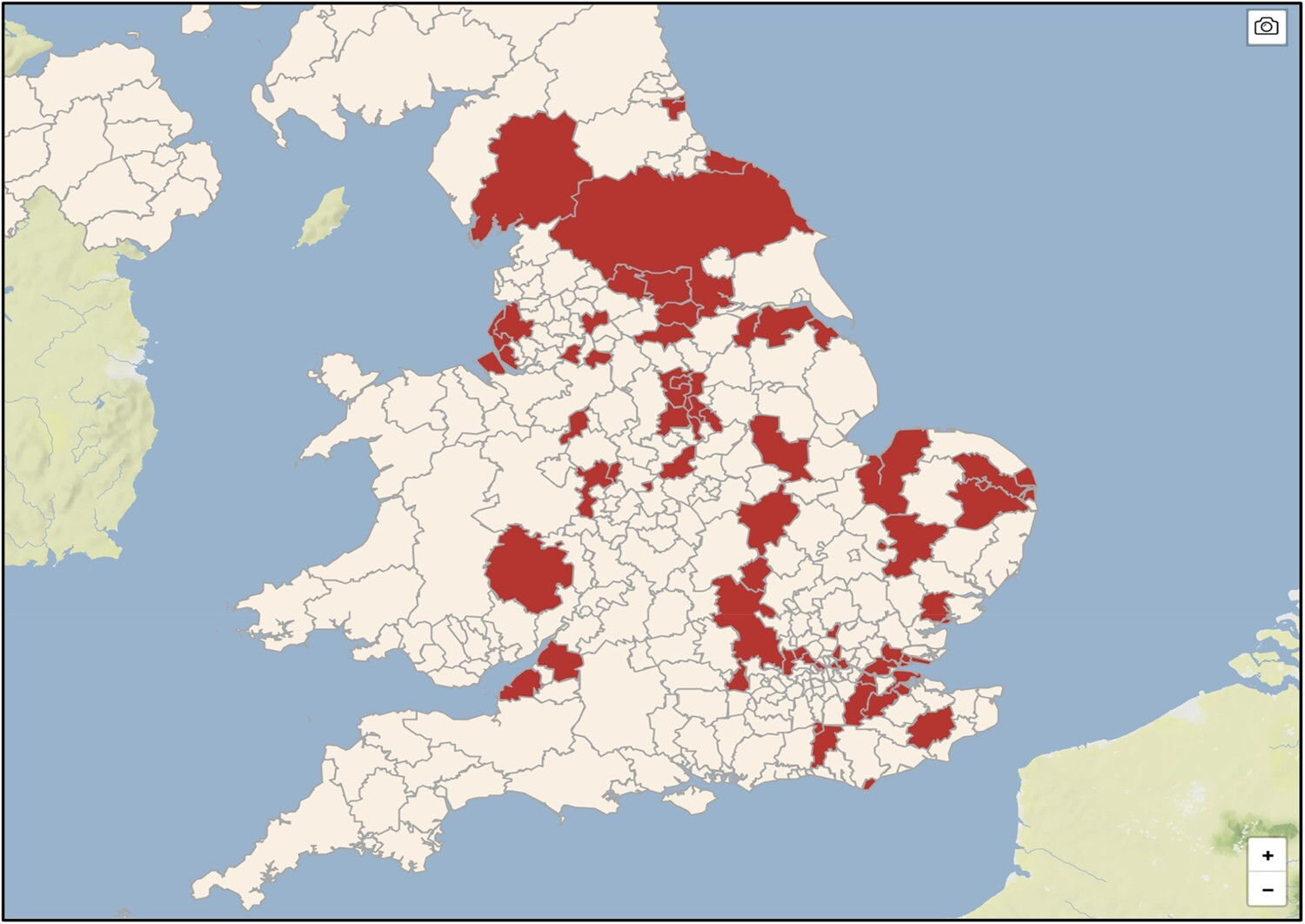
Although the justification for car cruising orders is to tackle car events including racing or stunts, the research found that PSPOs target a far broader range of behaviour, such as honking, swearing, playing music on the car radio, and even socialising in a car park.
This shows how these powers are being used for policing behaviour in a wider sense, rather than targeting risky behaviour that causes a genuine danger or nuisance.
The academics observed that activities such as racing and stunts are already prohibited in criminal legislation: dangerous car cruising meets would attract significant penalties, including a driving ban and large fines.
There been a shift from focusing on dangerous driving, to a broader penalisation of ‘anti-social vehicle use’, which includes a wider spectrum of behaviour.
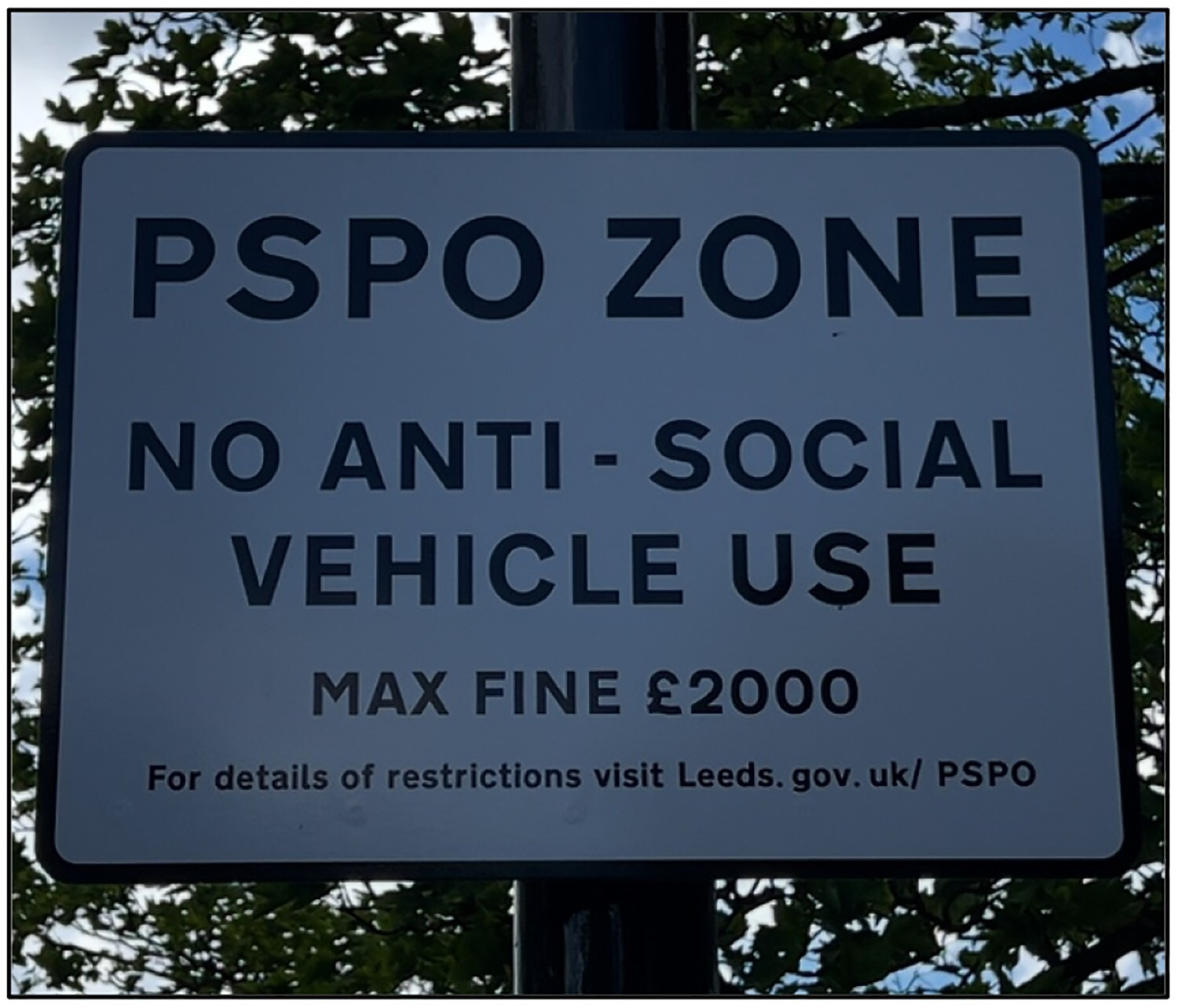
Indeed, some ‘car cruising’ PSPOs do not mention safety considerations. Only 21 PSPOs included a safety-related requirement prohibiting ‘creating a danger or risk of injury to road users including pedestrians’.
Instead, the authors of the report found that many PSPOs created new crimes:
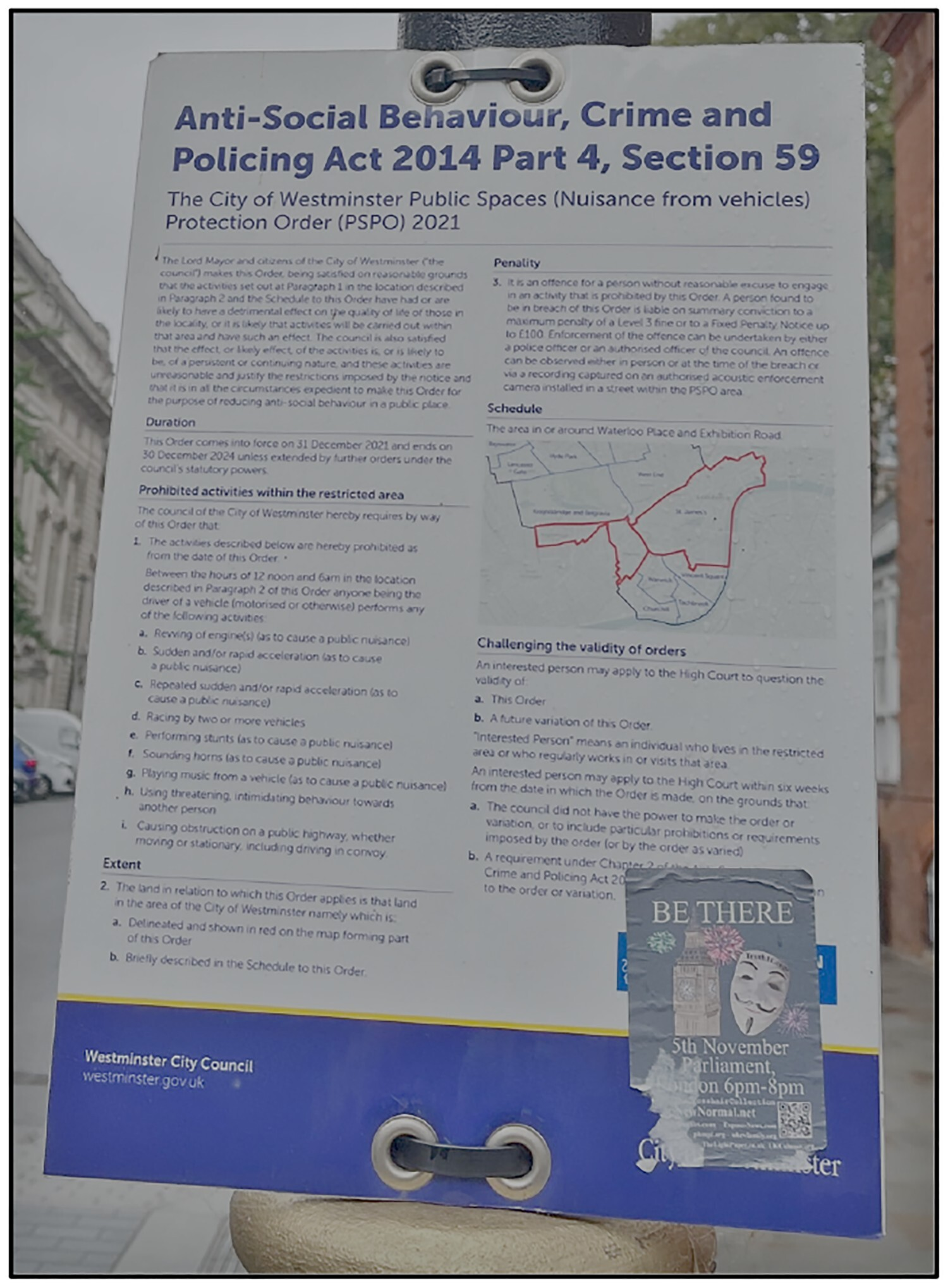
such as prohibiting the recording of the prohibited activities on any device, promoting/publicising/organising a car cruise event, undertaking ongoing repairs in car parks or on the public highway, and attending a car cruise event to sell goods, services, food or drinks. These requirements, alongside the use of foul, threatening, intimidating or abusive language, highlight the breadth of behaviours considered to be a problem beyond the driving itself. This demonstrates how car cruising PSPOs are created to serve a dual purpose of managing driver as well as spectator behaviours.
Other car cruising PSPOs prohibited people from congregating or loitering, playing music from car radios, revving engines, driving in convoy, and in four areas orders banned people from using sexual language or making sexual suggestions.
Here is a table from the report of some of the most common prohibitions in these orders:
| Performing stunts using motor vehicles: including but not limited to drifting, performing doughnuts, skidding, handbrake turns, and wheel spinning; and the racing of motor vehicles | 44 |
| Causing excessive noise; causing or allowing loud music to be played from a vehicle or a portable device to cause a nuisance | 41 |
| Sounding horns other than in accordance with the Highway Code (restriction on honking) | 39 |
| Revving of engines to cause a nuisance | 36 |
| Causing obstruction on the highway, whether moving or stationary, including driving in convoy | 35 |
| Using foul, threatening, intimidating or abusive language (which in four areas also specified sexual language and making sexual suggestions) | 28 |
| Congregating/loitering | 18 |
| Committing any ASB/nuisance | 17 |
These findings tally with our research on the area. We found that in 2023, five councils issued on-the-spot penalties for ‘car cruising’ offences, including a man in Westminster who was fined for ‘revving’ when he drove his Porsche Boxter past a noise camera:
It wasn’t being driven aggressively, being revved or speeding up…the car was literally driving, and it is a non-modified car with a factory-fitted exhaust.
Other broad orders we have encountered include Cumberland, which bans ‘congregating in a car park for the purposes of socialisation without permission’, while Colchester is planning to require people to turn off engines and music:
Drivers must switch off engines and any amplified music or sound systems when vehicles are parked or stationary in public spaces.
South Staffordshire‘s order bans:
Gathering of spectators which includes areas where people gather to support, watch or follow any type of vehicle activity causing a nuisance to the local community.
Such broad restrictions on ‘gathering’ to watch ‘any type of vehicle activity’ could include members of the public observing antique car meets, if neighbours or officials disapproved of the event.
Vicky Heap and Clare Farmer noted that this widening of the net could down-grade the seriousness of dangerous driving, with car racers potentially receiving an on-the-spot penalty, rather than the loss of points or licence that they might otherwise expect.
The academics also noted that some of the car cruising PSPOs cover whole local authorities or large areas, which would make it impossible to inform all motorists of the restrictions in the area:
It is probable that most drivers will have no idea whether and when they have entered a car cruising PSPO area. Some local authorities use signage, but this is inconsistent and, even where signs are present, their utility relies on a driver taking a route within the PSPO area where a sign has been installed. It then requires the driver to see the sign, to understand what it means, and to know precisely what behaviours are included. The range and diversity of car cruising PSPO content and coverage, makes it difficult for drivers to make any assumptions unlike other road signage, such as those detailed in the Highway Code, where the meaning is consistent across the country.
The academics suggest that the powers could be drafted deliberately broadly ‘just in case’, allowing police to take action when they see fit. This tallies with the justification for one of the earliest car cruising PSPOs, when Colchester banned people from parking in a retail carpark if they were not using the facilities. The order was targeted at car meet-ups, but when the police visited these events they said that they couldn’t intervene because ‘we are not finding them doing anything much‘. People were not committing a crime (they were ‘going there to socialise’), so the council created a new crime that would stop them from meeting.
Of course, dangerous car cruising events are a serious problem and should be prosecuted and punished. But the creation of new car crimes shows a shift from policing to behaviour policing. This blurs the distinction between people ‘not doing anything much’ and those who are putting other people’s lives in danger.
The police should focus on dangerous driving and activities that cause a serious threat to others – rather than penalising people from playing music on their car radios or honking their horn.
Such broad orders could have unintended effects. In Tanbridge, it is apparently council bus drivers who are one of the worst honking offenders, with one member of the public saying: ‘People park in the bus stop and then the bus drivers come along and honk honk honk.’ If a council creates such broad crimes, it could find a few penalty slips arriving on its own desk.
- Using Public Spaces Protection Orders to put the brakes on car cruising, by Vicky Heap and Clare Farmer, is published in the journal Policing and Society.